The Intelligence Cycle: A Strong Foundation
The framework used to guide intelligence analysis is called the Intelligence Cycle. At Ravenwood Intelligence Cooperative, we apply a six-step intelligence cycle to all our work.

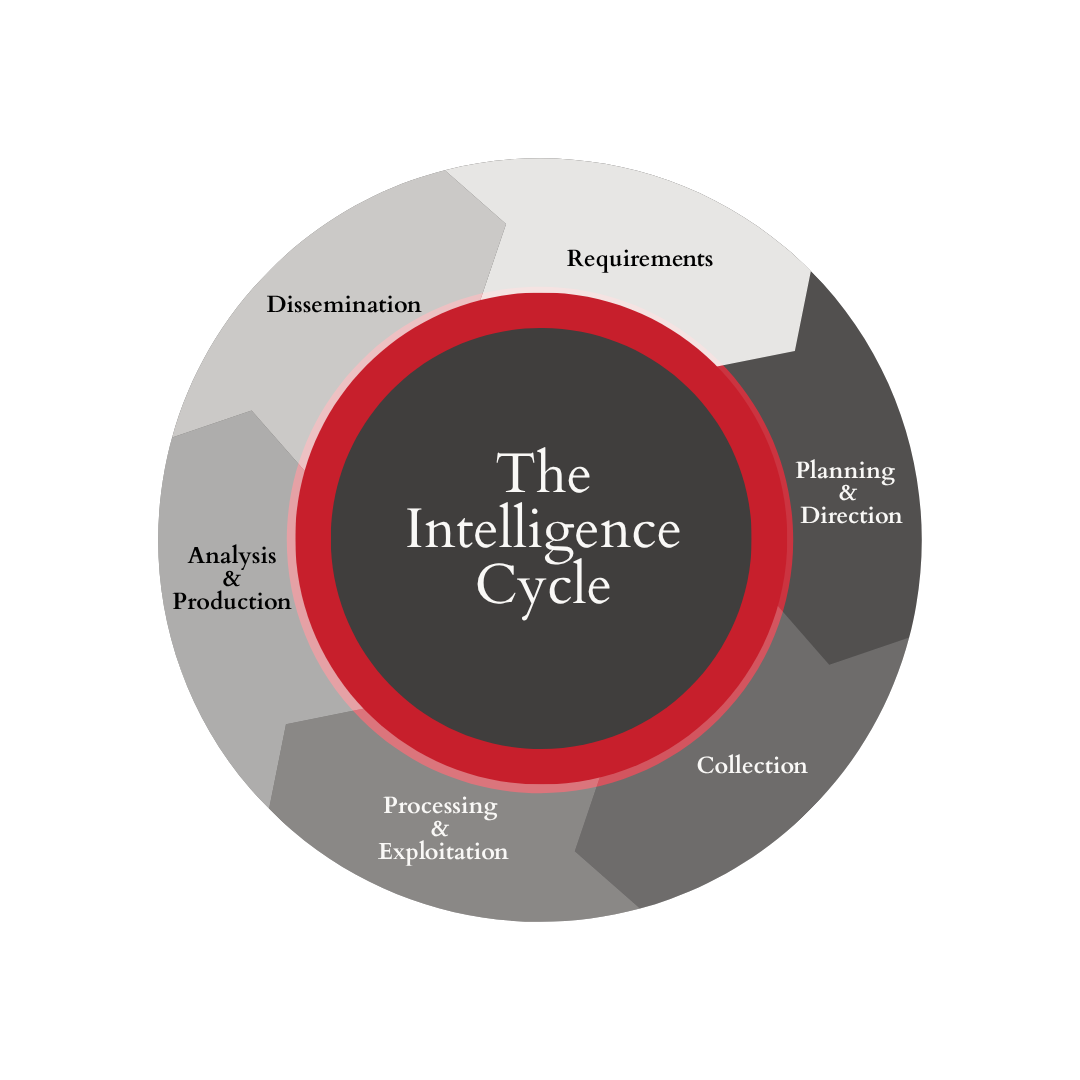
The framework used to guide intelligence analysis is called the Intelligence Cycle. Although some agencies and groups apply different names and may use a different number of steps, the process remains a continuous loop of planning, evaluating, processing, and analyzing. At Ravenwood Intelligence Cooperative, we apply a six-step intelligence cycle to all our work.
Step 1: Requirements
Requirements is a fancy way of saying we need to establish the specific context and define the specific issue or problem to be addressed. This ensures the information that will be collected later is relevant and resources are not wasted on unnecessary tasks. In the Intelligence Community, requirements are specific information needs that guide collection and analysis on a specific topic. Examples include questions such as what transportation routes are being used by drug couriers or what critical infrastructure sectors are being targeted by a specific group.
Requirements have a very close relationship with intelligence gaps. An intelligence gap is missing information or data that is needed to better assess threats and risks. Recognizing these gaps allows for clearer understanding of current knowledge limitations.
Step 2: Planning & Direction
Once the context and issue/problem have been determined, a plan must be made to address the requirements. The plan should include what information is known, what information is missing, and what information needs to be gathered. During this step, the analyst must prioritize which issues need to be addressed. The priorities guide the collection strategies to be used. This can also be referred to as a collection plan.
Step 3: Collection
Collection is the process of gathering relevant data through numerous methods. Examples of how data is collected include surveys, interviews with experts, and internet research. The U.S. Intelligence Community uses six types of intelligence collection:
• HUMINT (human-source intelligence),
• OSINT (open-source intelligence),
• GEOINT (geospatial intelligence),
• SIGINT (signals intelligence),
• IMINT (imagery intelligence), and
• MASINT (measurement and signature intelligence).
The data, as collected, is often referred to as raw intelligence; however, it remains raw data or information until it has undergone processing and exploitation, and connected to a requirement.
Step 4: Processing & Exploitation
Once collected, data must be processed and exploited. Data processing involves cleaning and organizing data for efficient analysis. In intelligence terms, data exploitation entails attaching meaning and value to data through enrichment alongside other available information. This may include preparing data for statistical modeling or documenting interviews in a report with context to make it more understandable.
Step 5: Analysis & Production
Analysis is the process of examining refined information to determine how it relates to requirements. Analysts use structured analytic techniques during this step to conduct effective analysis. Combining and integrating all sources of information often reveals patterns or gaps in knowledge. Analysts then produce intelligence conveying their assessments through actionable insights connected with initial requirements. These intelligence products are known as finished intelligence.
Step 6: Dissemination
Finally, intelligence products are shared with policymakers and decisionmakers through a variety of means. Intelligence dissemination should not be limited to written communication. Products should be tailored to audience needs, and range from written reports, verbal briefings in small or large settings, audio/video recordings, and even interactive applications. After receiving the final product and answering requirements, the decisionmaker may have more questions. The cycle continues.
Evaluation & Feedback
Evaluation and feedback are integral and continuous parts of the intelligence cycle. Throughout the process, analysts evaluate products and information for accuracy, bias, indicators of deception, relevance, and timeliness. Feedback encourages analysts to refine their methods and ensures products meet customer needs.