Choose a Path Before It's Chosen for You
Exploring algorithms, neural pathways, and societal changes after a six-year absence from social media.

Before joining the FBI, Kayla was an educator and sports coach. Using brain-based methods, she taught mathematics to hundreds of students and inspired confidence in athletes to achieve their goals.
A predictable question in every math class
“When am I ever going to use this?” a student asked, right in the middle of a lesson.
“That’s a great question,” I said. Shocked looks formed on students’ faces.
“For my athletes in the room, how many of you lift weights?” I asked. All the athletes raised their hands.
“For a competition, how many of you walk onto the court or field carrying a dumbbell with you?” No hands were raised.
I continued, “That’s because lifting weights builds the muscles you need to perform your sport, but you do not lift weights during your games or matches. Likewise, you may never solve multi-step equations in your everyday life, but like many mathematical concepts, solving equations exercises parts of your brain that are needed to build problem-solving skills for life.”
A look of amazement filled the students’ eyes.
Teaching mathematics was a work of art. Many mathematical concepts can be expressed through algorithms, step-by-step procedures for solving problems.
Algorithms, engagement, and bubbles
When I left teaching to join the FBI, I shed social media in the process. Once mathematics was no longer part of my routine, I never thought I would hear the word “algorithm” in everyday conversations—another way social media has changed our lives. Videos and articles abound with people sharing how to create content that social media algorithms will rank higher and, in turn, be seen by more people.
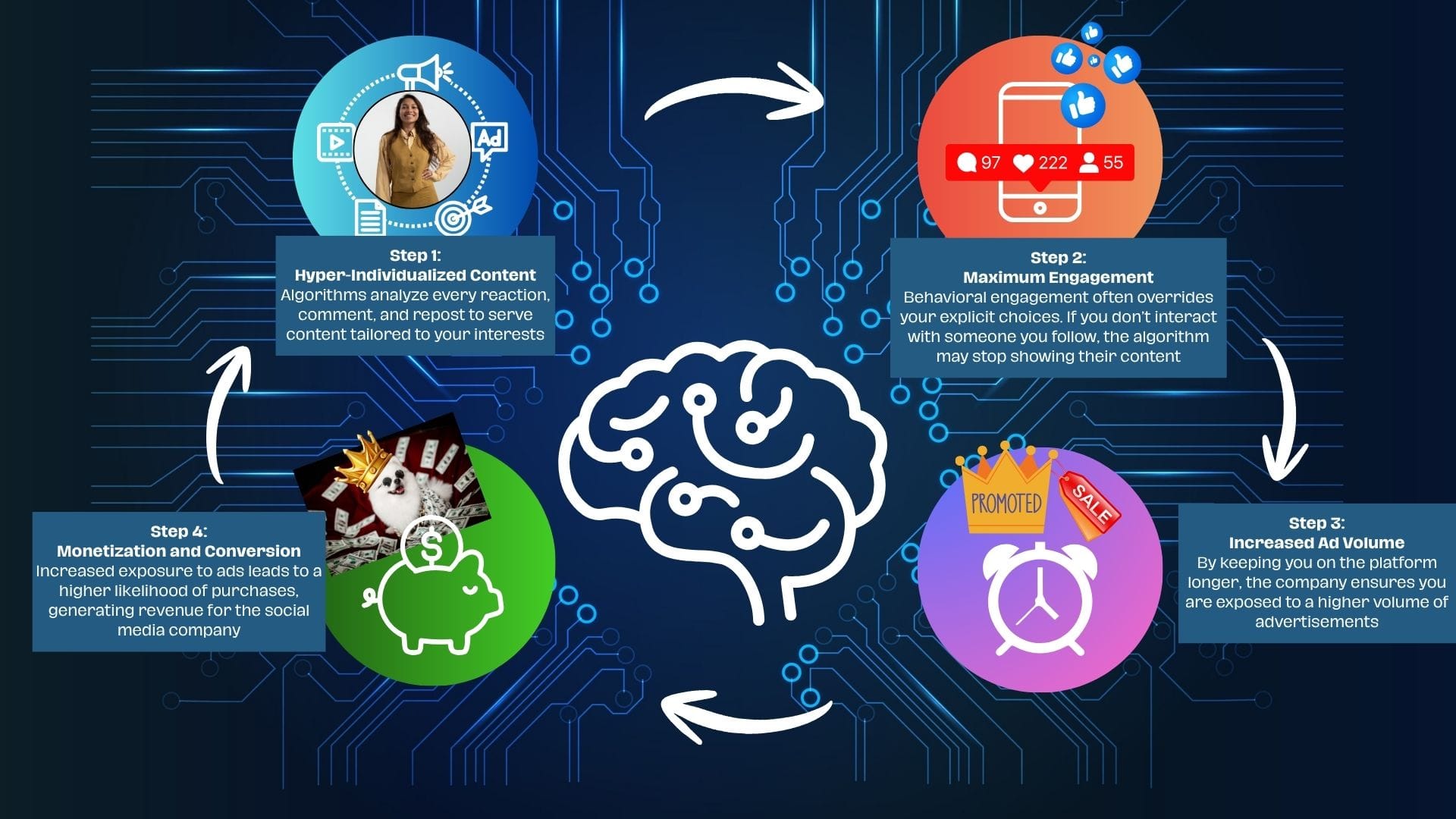
Social media algorithms determine content to display to each user to maximize user engagement. If users stay on the platform longer, users will see more ads, which increases the likelihood they will make purchases. This is the primary way social media companies make money.
Every reaction, comment, repost, or other engagement provides the algorithm with another data point to push hyper-individualized content.
Though not exclusive to social media platforms, social media can create epistemic bubbles and echo chambers. Filter bubbles (a type of epistemic bubble) form on social media because algorithms filter out relevant content but not necessarily because of the intent of the users. Echo chambers form within social media when relevant content is actively excluded and discredited from those inside the echo chamber. This distinction matters.
Though I had watched the documentary “The Social Dilemma”, heard the whistleblower complaints, and followed the growing legal challenges facing social media companies, nothing prepared me for how much had changed in my six-year absence from social media. I disengaged from social media before the COVID-19 pandemic, the murder of George Floyd, and the attack on the Capitol. Social media was ablaze, and I was not following.
At the end of 2025, I created an account on a social media platform. I added people I knew and chose companies to follow. Over the course of a few months, content from one company had disappeared from my feed. I navigated to their page. They had posted stories, but I had not seen any in weeks. It occurred to me that I had not been engaging with the content. Reading on my feed, yes. Engagement, no.
Therefore, my engagement behavior overrode my initial request, and the algorithm quickly adjusted.
Neurons that fire together, wire together
Several studies, stories, and court cases reveal concerning impacts from social media algorithms:
- A study found that YouTube recommendations can lead users down a rabbit hole of extremist political content.
- A study found that a platform’s algorithm amplifies emotionally charged, out-group hostile content that users say makes them feel worse about their political out-group.
- Internal memos at Facebook revealed a change in 2018 that rewarded outrage.
- A study found that falsehoods were 70% more likely to be reposted than truthful stories
- As of July 2026, there were over 2,893 cases pending in a multidistrict litigation (MDL-3047) against major tech companies, alleging the design of the platforms can encourage addictive behavior in adolescents, resulting in harm.
- In March 2026, “a California jury found Meta and YouTube negligent in implementing design features that made their apps addictive.”
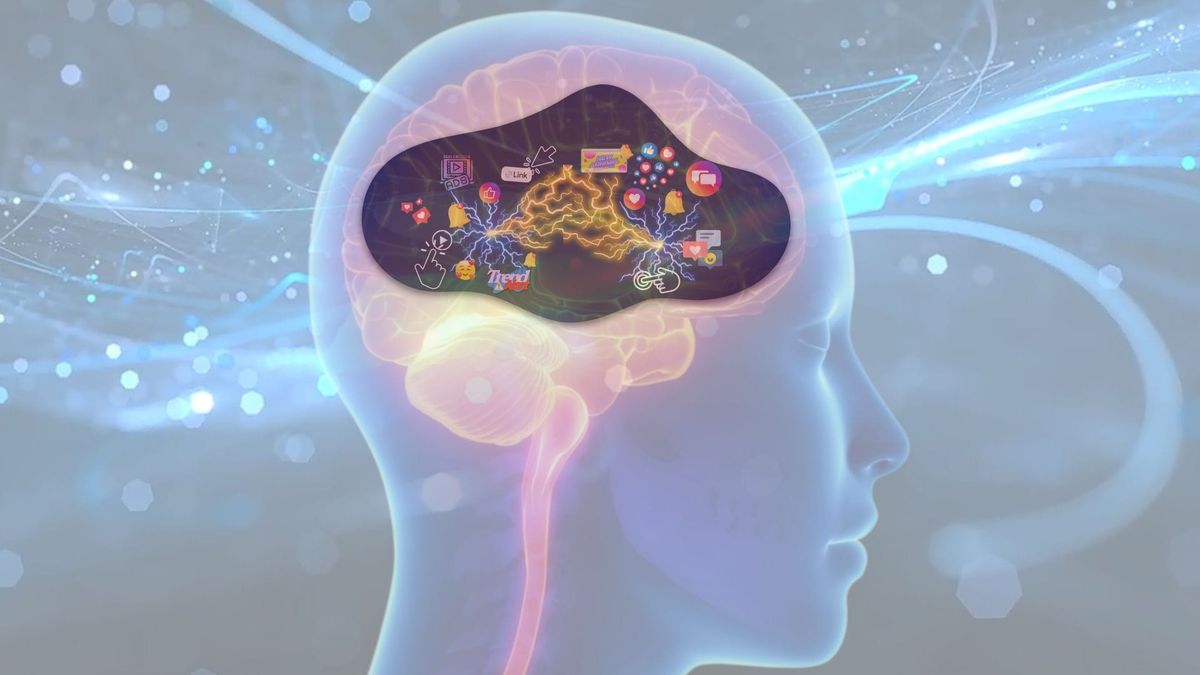
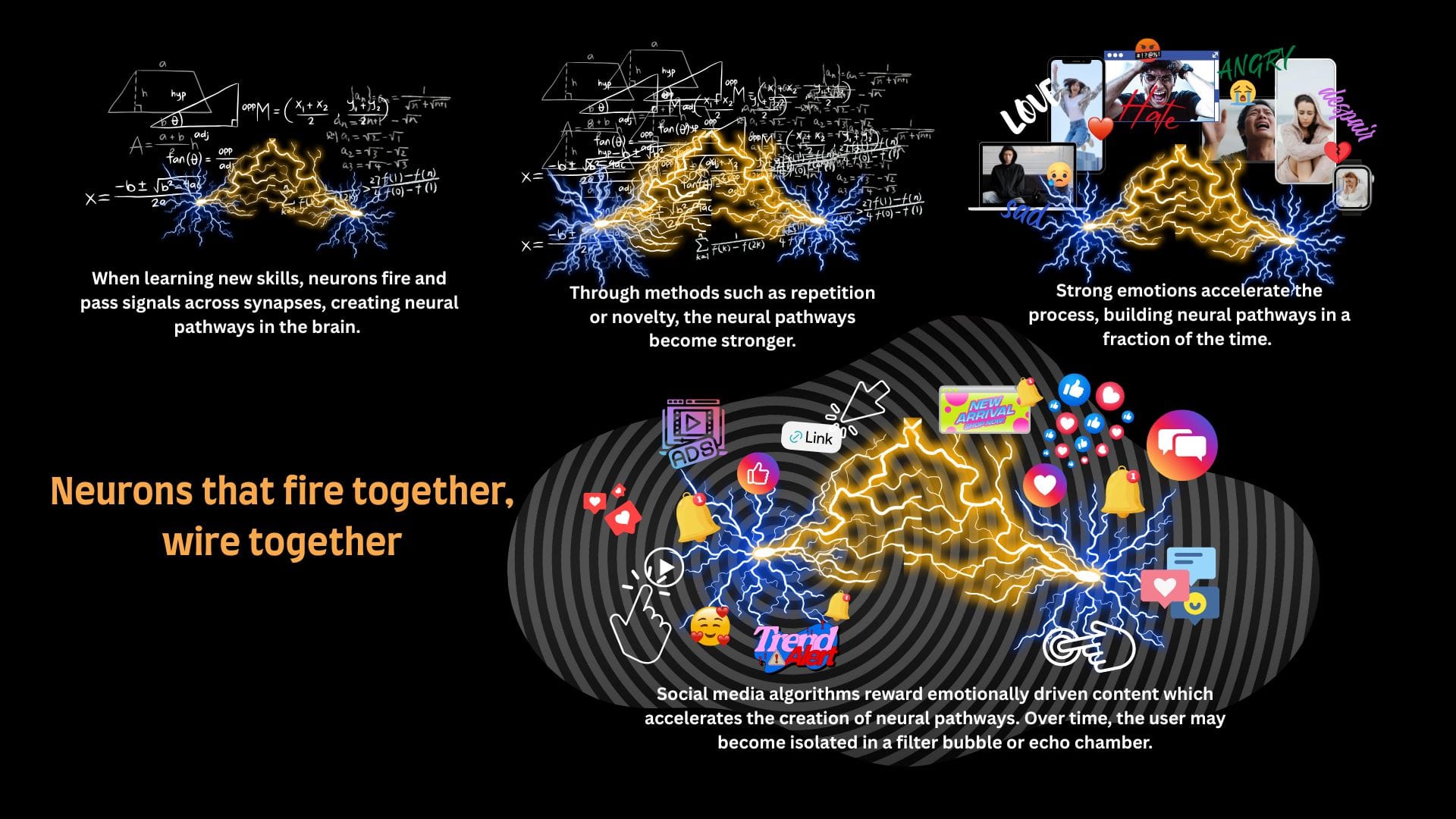
These results are understandable when considering the concept, “Neurons that fire together, wire together.” When a person is learning a new skill, such as solving multi-step equations, neurons in the brain fire and pass signals across synapses. This creates a neural pathway, ingrained into the brain’s circuitry. Through methods such as repetition and novelty, the neural pathways become stronger over time.
To visualize this, think of a pathway that forms through a forest because people walk the same route.
When strong emotions are added, this process is accelerated in the brain. The neural pathways are built in a fraction of the time in comparison to rote repetition. Emotions activate other parts of the brain and create a larger web of pathways, establishing multiple points for recall.
To continue the forest analogy, think of a bulldozer forming the path.
Putting it all together
When people interact with social media, they enter the world of algorithms. When you come across a video and think, “Is anyone else seeing this?”, the answer is probably only people who have engaged with similar content and whose algorithm decided to show it to them as well. Otherwise, no, the family member or friend that you wish could see your viewpoint is not seeing what you are seeing.
Each time we read the next suggested story, view the next recommended video, etc., neurons in the brain are firing and wiring together, creating neural pathways or strengthening pathways.
Since social media algorithms reward emotionally driven content, our brains naturally accelerate the speed in forming neural pathways around the content that is served to each person individually. This can be reinforced further if we, or people we know, become isolated in filter bubbles or echo chambers.
Though much of this analysis has been around negative outcomes, brain-based concepts can be used for positive outcomes. Educators use music, humor, novelty, and visuals, like videos, to enhance learning. Analysts use deliberate processes to avoid bias, challenge assumptions, and look at things from different perspectives. They conduct structured analytic techniques like Analysis of Competing Hypotheses, Key Assumptions Checks, Devil's Advocacy, What-ifs, scenarios, etc.
Our brains have neuroplasticity throughout life and more is being discovered. People are not bound to travel the same neural pathways forever and new neural pathways can form. I saw this as an educator and it’s true for adults too, but the process is intentional. Check out this video to continue learning more, your brain will not be the same!
Continue to check back in with us here at Ravenwood as we follow the court cases involving social media and how their algorithms impact society (such as when they make changes to user or parental controls).